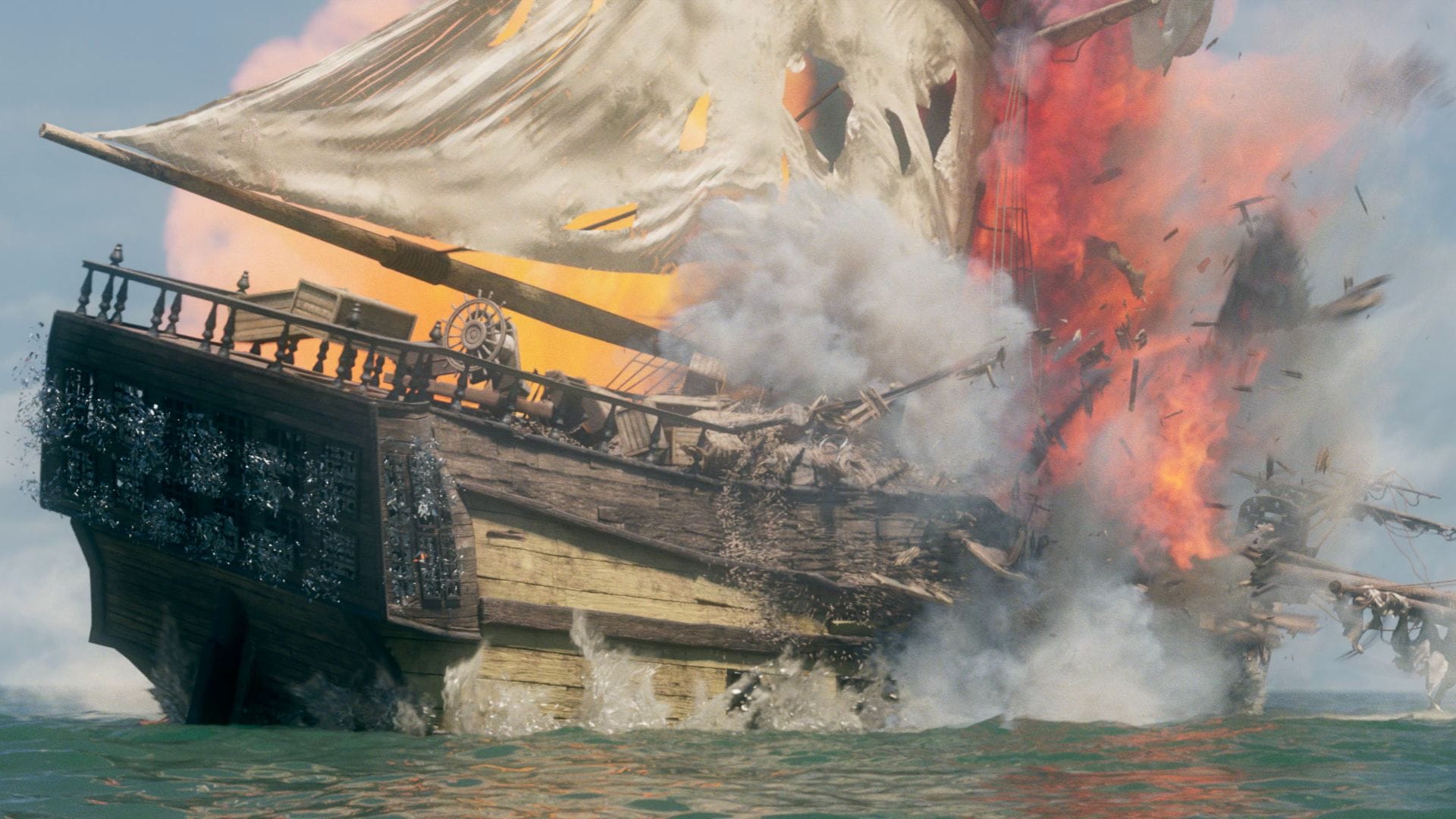
Pirate Ship Destruction Workshop Part 2: Lighting, Rendering & Compositing
Taught by Ganesh Lakshmigandan
- Duration:
- 4 hours 36 minutes
- Software Version:
- V21
- Launch Date:
- July 2026
- Course Number:
- HOU246
3D
vfx
3D
vfx
Using Houdini Solaris, Karma CPU, and Nuke, Ganesh covers scene assembly, lighting setup, FX look development, shader creation, render passes and AOVs, render optimisation, and denoising workflows. The course then moves into compositing, where artists integrate multi-pass renders, manage continuity across shots, add atmospheric effects, perform colour grading, and apply the final polish for delivery.
Ganesh Lakshmigandan brings extensive production experience to the workshop, with credits including Avatar: The Way of Water, House of the Dragon, Avatar: Fire and Ash, Dune: Part One, The Jungle Book, and Dunkirk. His expertise spans large-scale destruction, environmental FX, lighting, rendering, and final-shot production, bringing real-world techniques from some of the industry's most technically demanding projects directly into the classroom.
Class Listing
Class 1: Ocean Integration, FX Cleanup & Solaris Foundations
This class focuses on preparing the simulation assets from Part 1 for lighting and rendering. We’ll blend the FLIP simulation into the broader ocean system, create displacement and blend masks, and refine water interaction details for seamless integration at render time.Pyro and destruction cleanup are also covered before the foundational Solaris workflow is introduced, which is used throughout the course. We conclude by assembling a basic LOP network that brings all major FX components together within a unified stage.
Class 2: Stage Assembly & Lighting Setup
Class two focuses on building the final production scene inside Solaris. We’ll assemble the simulation elements, replace animation assets with their FX counterparts, organise the stage hierarchy, and prepare the sequence for lighting and rendering.We then create a production-style lighting rig designed to support the destruction sequence's scale, mood, and visual direction.
Class 3: FX Look Development in Karma
With the stage assembled, attention shifts to the look development. This class explores shader creation and refinement for pyro, water, debris, whitewater, and destruction elements using Karma.Material response, shading controls, and rendering considerations are used to create visual consistency across all FX components while establishing the final look of the sequence.
Class 4: Render Passes, AOVs & Render Optimisation
This class focuses on preparing the sequence for compositing. We’ll create render passes and AOVs for each shot while exploring the utility passes commonly used during compositing workflows.Denoising techniques, render optimisation strategies, and methods for improving efficiency are also covered before preparing the final renders for compositing in Nuke.
Class 5: Compositing the Sequence - Shot Assembly
The compositing phase begins in Nuke. This class focuses on assembling render layers, integrating AOVs, and constructing the core compositing framework for the sequence.Particular attention is given to managing complex render layers while maintaining consistency across multiple shots and camera angles.
Class 6: Continuity, Atmosphere & Image Enhancement
Building on the previous class, the focus shifts to refining the sequence and strengthening visual continuity. We’ll explore techniques for balancing shots, managing matched-action cuts, and integrating atmospheric effects that enhance depth and scale.Additional image enhancement techniques are applied to help unify the sequence ahead of final grading.
Class 7: Final Grade, Polish & Delivery
The final class focuses on completing the sequence through colour grading, grain integration, image cleanup, and final polish.The course concludes with final delivery preparation and a review of the finished pirate ship destruction sequence, demonstrating the complete workflow from simulation through to final composite.